Posts

Showing posts with the label Flora Friday

Flora Friday - Foxglove

Image
(picture from meadowmania.co.uk) Hello all! It's been a long time since we've done one of these so bare with me!  Today's Flora Friday is Foxglove   Foxglove ( Digitalis )  is a genus that consists of around 20 different species of herbaceous perennial plants belonging to the Plantaginaceae family (formally considered part of the Scrophulariaceae and Veronicaceae families) and come in a verity of shades and colours, namely; purple, white, pink and yellow. I have determined that the Foxglove pictured above is Digitalis Purpurea  Other names include: - Fairy's Glove - Fairy Fingers  - Fairy Cap - Lady's Glove  - Virgin's Glove - Common Foxglove  - Vingerhoedskruid - Fingerborgsblomma (Swedish) - Fingerbøl - Garden Foxglove  - Herba da cobra - Revebjelle - Dead Man's Bells  - Witch's Gloves  Where To Find + How To Identify  Foxglove is native to Northwestern Africa, Europe and Western Asia. They are commonly used as orname...

Flora Friday - Hemlock

Image
Photo creditv Aaron Carlson Hello all!! I'm stepping in today to do Flora Friday and this week's FF is Hemlock! Hemlock ( Conium Maculatum ) is an extremely poisonous plants that surprisingly belongs the carrot family Apiaceae. Other names include: - Poison Hemlock - Wild Hemlock - Warlock's Weed - Winter Fern - Water Hemlock - Spotted Hemlock - Spotted Cowbane - Water Parsley  Where To Find Hemlock is native to Europe and the Mediterranean. It has also become naturalised in Asia, Australia, North America and New Zealand. In the UK, Hemlock can be found in some woodland areas. Edible Parts ALL OF THIS PLANT IS POISONOUS. DO NOT CONSUME. IF ACCIDENTALLY INGESTED, SEEK IMMEDIATE MEDICAL ATTENTION! Medical Uses Surprisingly, this plant has medicinal properties but, as the plant is highly poisonous and I am not a medical or herbal professional, I cannot, in good faith, list them. Please consult a professional before attempting to use Magickal Uses In magickal practi...

Flora Friday - Pomegranate

Image
  (Photo Credit - Sainsbury's) Hi Guys, It suddenly occurred to me that we hadn't covered the pomegranate during Hallowe'en season. So I'm stepping away from the witch's brew we've been following, but just for this week. Used for centuries in Ayurvedic medicine, this little fruit has many benefits. You can also utilise the flower, leaves and bark of the tree too. Latin Name -  Punica granatum Folk Names: Carthage Apple Grenadier Malicorio Malum Punicum Pound Garnet Granatum Gender: Female Elements: Air Fire Planets: Venus Pluto Star signs: Scorpio Deities: Astarte Persephone Sekhmet Chakras: Third Eye Chakra Root Chakra This fruit is connected to this time of year due to the story of Persephone ( Greek ): As the daughter of Demeter, the Goddess of the fields and harvests, Persephone was originally an Earth goddess walking the Earth with her mother, until her uncle, Hades, kidnapped her and took her to the underworld. She was deeply unhappy there and refused to e...

Flora Friday - Jimson Weed

Image
photo credit: Robert Benner Sr Hello all! C here just dropping in with another Flora Friday! Continuing with our poisonous/Witches Brew theme, today's Flora Friday is Jimson Weed! Jimson Weed ( Datura Stramonium ) is a flowering plant belonging to the Nightshade family Solanaceae . Other names include: - Jimsonweed - Thorn Apple - Devil's Trumpet - Devil's Snare - Malpitte (Afrikaans - Mad/Evil Seeds) - Witch's Thimble  - Ghost Flower  Where To Find Jimson Weed is native to North America but has become naturalised in many other parts of the world. It likes warm and temperate regions where it can be found by roadsides and animal enclosures that are rich in dung. In Europe , it likes wastelands and dumping grounds. Edible Parts ALL OF THIS PLANT IS TOXIC! DO NOT CONSUME, IF ACCIDENTALLY CONSUMED OR USES FOR RECREATIONAL PURPOSES, GET TO HOSPITAL IMMEDIATELY! Medical Uses Surprisingly, this plant does have medical uses, however, because it is toxic and I am no...

Flora Friday - Mandrake

Image
(Credit - damnederangel)   Hi Guys, Continuing our Hallowe'en series this month, I have decided to look at Mandrake. As this plant is considered poisonous (especially the leaves and root), it makes our Hallowe'en list!  It is considered a masculine herb with fire energies. It is connected to the deities Hecate and Hathor. It is hallucinogenic, and a neurotoxin. It is mainly found in Mediterranean areas and England.  Ancient Greeks burned Mandrake as an incense.  It is said that mandrake was a key  ingredient in witch's flying brew, possibly due to its hallucinogenic properties. Although it is not all bad, it has healing properties too, and these include: Reducing inflammation Analgesia Eases joint pain Eases Rheumatic pains Treats skin ulcers Treats skin inflammation Treating melancholy Treating convulsions Treating mania Sedative Metaphysical properties: Love Fertility (sleep with a root under your pillow to boost fertility) Protection Health  Money...

Flora Friday - Raskovnik

Image
Picture from Shutterstock Hello all!! It has been a while so forgive me for being a bit rusty! Kerenza is a bit tied up today so I'm briefly jumping back into the fray with a Flora Friday! Our Flora Friday today is Raskovnik! Raskovnik is a plant from Slavic folklore and mythology which means that this herb belongs to a closed practice so information may not be forthcoming. Other names for Raskovnik include: - Razkovniche - расковник (Macedonian/Serbian) - разковниче (Bulgarian) - разрыв-трава (Russian) - rozryw (Polish) - raskov (Leskovac) - ež trava (Macedonian -  Hedgehog herb) - demir-bozan (SE Montenegro - iron breaker) - špirgasta trava (Syrmia) - zemaljski ključ (Slovenian - earth key) - mavričin koren (Savinja Valley - Rainbow root) Raskovnik itself appears to be more of a mythological plant than a real life plant but there are plants that bare resemblance to Raskovnik or have the alternative name of Raskovnik (this of course varies from plant to plant dependi...

Flora Friday - Basil

Image
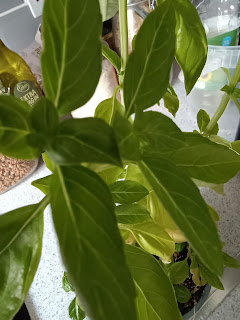
  Hi Guys, Continuing with the Elements this week, and looking at Basil with its connection to spirit.  The pic above is of the living basil in my kitchen! This is sweet basil, more commonly used in cooking than healing. Tulsi is Holy Basil - more on that below. It is originally native to India. There are now approximately 150 varieties of basil now grown throughout the world. A strongly aromatic herb, basil is considered to be holy in Hinduism as it is a manifestation of the Goddess Lakshmi who is the principal consort of Vishnu.  Tulsi was used in Ayurvedic medicine. Research has shown that it has many benefits, including improving your mental health. It has compounds that can help to alleviate anxiety and depression, increase your ability to think clearly, and lower the risk for age-related memory loss. (Rosemary is also beneficial for recall). The Lord Krishna, an avatar on this Earth of Vishnu, is said to wear a garland of basil leaves and flowers around hi...

Flora Friday - Air

Image
(Photo Credit: Kerenza Jinks) Hi Guys, Flora Friday is here, along with plants that correspond to the element of air.  We have already done dandelion ,, so I will look at some other plants and see what we can get. According to Witchipedia, some plants that are associated with the element of air are as follows:  Acacia  Agrimony Almond   Alyssum  Anise  Bluebell Dandelion   Eyebright  Fennel Goldenrod  Hazel  Lavender   Lungwort Magic Mushroom  Marjoram   Mint  Mistletoe  Monarda  Nutmeg  Oregano  Parsley  Peppermint  Pine  Sage -  please note  use of white sage is considered a closed practice Southernwood   Sweet Pea  Wormwood How many of these do we have in our spice cupboards? I know that I have many. I also have various dried herbs that I use when making our own blend incenses . As I have plenty of mint both dried and growing in the garden, ...

Flora Friday - Beech

Image
  Hi guys, Today I am attempting to do the Beech tree justice. I have a feeling that just like the willow, it is going to be a bit longer than some other posts. Beech is a deciduous tree in the family of Fagaceae, and one of approximately thirteen species. It is native to temperate Europe, North America and Asia. It has both male and female flowers on each plant, the flowers or catkins appear in the Spring, and the beechnuts, or mast, appear in the autumn. These are small, roughly triangular seeds that are edible, but bitter to the taste, astringent and taste slightly nutty. Uses: Furniture framing Flooring Plywood manufacture Firewood Smoking foodstuffs (some German smoked beers, ham, sausages and cheese) Beer making (an American lager uses slats in the bottom of the fermentation barrel) Drum making Creosote Rifle stocks Animal Husbandry (17th Century Switzerland) Pigment making (bistre - a greyish/brown colour- was made from the soot) Beechwood tablets we...

Flora Friday - Tongue Fern

Image
Hi guys, In today's Flora Friday, I decided to cover one of the oldest forms of plant life, the fern, with fossil records dating back to the mid-Devonian period 383-393 million years ago. I also didn't realise that ferns were linked to the element of water until I started researching and writing this post! The links to water are listed in the magic section below.   There are many different types of fern, this one above, is a Hart's-tongue Fern.  Latin name is  Asplenium scolopendrium It is an evergreen, and native to the Northern Hemisphere, although variations of this fern occur worldwide. It is a fern that does not have divided leaves as most ferns do.  According to the Woodland Trust, it is an excellent indicator that you are exploring an ancient woodland and very special site. Uses The fronds contain compounds that are used in medicines and cosmetics.  Its uses range from astringents and cough medicines, to treatment of high blood pressure and for healing wo...

Flora Friday - Willow

Image
                                                                 (Credit - clipart-library.com) HI guys, Flora Friday today, and I thought that I might start with a tree, the willow. Then I realised how long this post will end up being after just a few minutes on the internet! So, without further ado, let's get into it. There are over 400 types of willow, so I am trying to keep this post as succinct as I can! From the genus salix, most of the willow family are found in the Northern hemisphere, and are deciduous.  Some of the broader leaved shrubby varieties are called Osier (also giving us the name for basket weaving - usually using willow as the main wood) and the broader leaved species can be called Sallow (Old English Sealh - also possibly where the Ogham rune for the le...

Flora Friday - Red Hot Poker

Image
Hello and welcome to my first flora Friday. This will probably have a different layout to the ones that Cat has done, and I can only apologise if this jars because of this. The above flower is just up the road from me and has the colloquial name of Red Hot Poker. Also called: Torch Lily, Kniphofia, (I couldn't say this one!!) It was first described as a Genus in 1794 and is native to Africa. The spiritual properties of this flower include: Enhancing your knowledge of self; Knowledge of inner teachings; Knowledge of inner teachings; Stepping away from your physical body. There are no known medicinal uses of this flower, it is also not known if there is anything harmful about this plant. Please DO NOT go out and find out. There is nothing about this flower nor it's family in Victorian Flower Language, either. As always, please consult a medical professional before adding anything into your health and wellbeing. If I have left anything out, or got it wrong, please let me know in t...

Flora Friday - Alpine Delphinium

Image
Hello all!! Today's Flora Friday is Alpine Delphinium!! Alpine Delphinium ( Delphinium Elatum ) is a vertically flowering plant, surprisingly, from the Buttercup family Ranunculaceae . Other names include:  - Larkspur - Alpine Larkspur  - Candle Delphinium - Candle Larkspur - Bee Larkspur - Delphinium Excalibur - Delphinium  Where To Find Alpine Delphinium is native to the temperate regions of Asia and Europe and likes sunny areas and rich soil. This plant often has to be supported or the flowers heads may collapsed  Edible Parts THIS PLANT IS TOXIC! DO NOT CONSUME AND KEEP AWAY FROM ANIMALS!!  If accidentally ingested, get to a hospital! And by toxic I mean can cause paralysis, severe illness and, in some cases, death! Medical Uses As this plant is toxic I cannot, in good faith, list any medical uses  Magickal Uses I cannot find anything for Alpine Delphinium specifically but Larkspur, in general, can be used for: - Representing the element of...

Flora Friday - Falling Stars

Image
Hello all!! Today's Flora Friday is Falling Stars!! Falling Stars ( Crocosmia Aurea ) is species of flowering plant from the Iridaceae family. Other names include: - Valentine Flower - Montbretia Where To Find Falling Stars is native to South Africa and are most commonly found from Southern to Eastern Africa and can easily be found in the grassland region of Cape Floristic. It likes shady forests areas and riverbanks and areas that are moist. Edible Parts The flowers can produce a yellow dye to colour food that is often used as a Saffron substitute  Medical Uses In medical practices, Falling Stars can be used for:  - Rheumatism - Treating malaria  - Treating dysentry Magickal Uses I cannot find any specific magickal uses for Falling Stars. If you know of any, let us know! It is a member of the Iris family and the name Falling Stars does suggest association with star related Magicks  Victorian Flower Language I cannot find anything for Falling Stars specia...

Flora Friday - Orange Hawkweed

Image
Hello all!! Today's Flora Friday is Orange Hawkweed!! Orange Hawkweed ( Pilosella Aurantiaca/Hieracium Aurantiacum ) is a species of flowering plant from the Asteraceae family. Other names include: - Fox-And-Cubs - Orange Hark Bit - Devil's Paintbrush - Grim-The-Collier - Tawny Hawkweed  - Red Daisy  Where To Find Orange Hawkweed is native to the Alpine region of Southern and Central Europe. They like pastures, roadsides, meadows and abandoned/unkempt spaces Edible Parts I cannot find anything for this specific Hawkweed but other members of the Hawkweed clan are edible so I would contact an expert just to be sure!! Medical Uses Again, I cannot find anything for this specific Hawkweed but other Hawkweeds have medicinal properties so, consult a qualified herbalist!! Magickal Uses In magickal practices, Orange Hawkweed can be used for: - Enhancing Vision - Clarity - Grounding  - Self sufficiency - Unconditional love - Getting rid of mental fog  Victorian Flo...

Flora Friday - Sea Bindweed

Image
Hello all!! Today's Flora Friday is Sea Bindweed!! Sea Bindweed ( Calystegia Soldanella  aka Convolvulus Soldanella ) is a species of Bindweed from the Convolvulaceae  family. Other names include:  - Seashore False Bindweed - Shore Bindweed - Shore Convolvulus - Beach Morning Glory  Where To Find In North America, Sea Bindweed is mostly found on the West coast but can also be found in select areas of the East coast. It can be found along most of the sandy coasts of England and Wales and around the coast of Southern Ireland, not so much Northern Ireland or Scotland. Edible Parts The young shoots can be cooked like a vegetable or pickled for future use. Apparently the leaves are also edible, HOWEVER , this plant is known to have purgative effects so consult an expert before ingestion! Medical Uses In medical practices, Sea Bindweed can be used as a: - Diuretic - Purgative - Irritant - Antiscorbutic (prevent/cure scurvy) - Vermifuge (destroys parasitic worms...

Flora Friday - Cape Daisy

Image
Hello all!! Today's Flora Friday is Cape Daisy! Cape Daisy ( Osteospermum Ecklonis ) is a species of plant belonging to the Asteraceae family.  Other names include: - Cape Marguerite - African Daisy - Van Staden's River Daisy - Sunday's River Daisy - White Daisy Bush - Blue-and-white Daisy Bush - Star of the Veldt  - کیپ ڈیزی (Urdu) - Freeway Daisy - Sailor Boy Daisy - Moon Daisy - Half Moon Daisy  Where To Find The Cape Daisy is native to South Africa and is considered a weed in parts of Australia, it likes wet grass and river beds Edible Parts I can't find much on this specifically but some sources say that the leaves are edible but I would consult with an expert first  Medical Uses I cannot find anything for this specific flower, if you have any questions, consult a qualified herbalist and/or doctor  Magickal Uses I cannot find anything for this Daisy specifically, but her is our post on Daisies in general: Flora Friday - Daisy Victorian Flo...

Flora Friday - Lawson Cypress

Image
Hello all!! This week's Flora Friday is Lawson Cypress!! Lawson Cypress ( Chamaecyparis Lawsoniana ) is conifer species of the Cupressaceae family. Other names include:  - Lawson's Cypress  - Port Orford Cedar - Oregon Cedar - Port Orford White Cedar - Lawson's False Cypress - Lawson Cedar - Ginger Pine - False Cypress - Ellwoodii - لاوسون (Sindhi) Where To Find Lawson Cypress is native to Oregon (Southwestern) and California (Northwestern) and are primarily found along streams in the Klamath Mountains. They have also been naturalised in Europe, particularly in the South  Edible Parts Lawson Cypress is not edible. It's not poisonous but nearly every tree that has Cypress as a common name is not edible for one reason or another  Medical Uses The resin is a powerful diuretic.  It can also supposedly help with: - Respiratory health - Boosting the immune system - Fungal infections - Hair Health - Inflammation - Wound healing - Excess sweating - Rel...

Flora Friday - Climbing Nightshade

Image
Hello all!! Today's Flora Friday is Climbing Nightshade!! Climbing Nightshade ( Solanum Dulcamara ) is a vine like species that belongs to the Solanaceae family, which also includes tomato and potato! Other names include: - Bittersweet - Bittersweet Nightshade - Bitter Nightshade - Blue Bindweed - Amara Dulcis - Dulcamara  - Elinog - European Bittersweet  - Fellenwort - Felonwood - Poisonberry - Poisonflower - Scarlet Berry - Snakeberry - Trailing Bittersweet - Trailing Nightshade - Violet Bloom - Woody Nightshade - Besksöta Where To Find Climbing Nightshade is native to Europe and Asia and has become a naturalised species in other areas, most notably, North America. It likes wetlands, disturbed ground, forest edges/forests and the edges of rivers and lakes. Edible Parts This plant is considered toxic although severe reactions and poisonings are rare. It is however, EXTREMELY toxic to dogs, cats and horses and is more toxic to children than it is to adult Medical ...

Flora Friday - Chives

Image
Hello all!! Today's Flora Friday is Chives!! Chives ( Allium Schoenoprasum ) is a flowering plant from the Amaryllidaceae  family, which is related to the garlic, onion, leek, scallion, shallot and Chinese onion families. Other names include: - Wild Chive - Giant Garlic - Common Chive Where To Find Chives are native to temperate Europe, Asia and North America. As the plant can also be ornamental, they can also be found in gardens (Chives also have insect/pest repelling properties) Edible Chives are, of course, edible!! The stalks  (scapes) are used for cooking, as are the unopened, immature flower buds. The actual flowers are also edible and make a nice colourful edition to salads Medical Uses In medical practices, Chives can be used for: - Digestive issues - Heart health - Boosting immunity - Bone health - Helping vision - Detoxing - Skin health - Fighting inflammation - Aiding metabolism - Helping circulation Magickal Uses In magickal practices, Chives are used ...